Why Modern Diets Leave Us Nutrient Deficient (Even When We Eat ‘Healthy’)
Introduction
Many people today eat better than ever before. They choose whole foods, limit sugar, cook at home, and include fruits and vegetables in their diets — yet still struggle with low energy, frequent illness, brain fog, and poor recovery.
So what’s going wrong?
The uncomfortable truth is this:
Modern diets often fail to provide the nutrients our bodies actually need — even when we eat “healthy.”
Understanding why this happens is the first step toward better health.
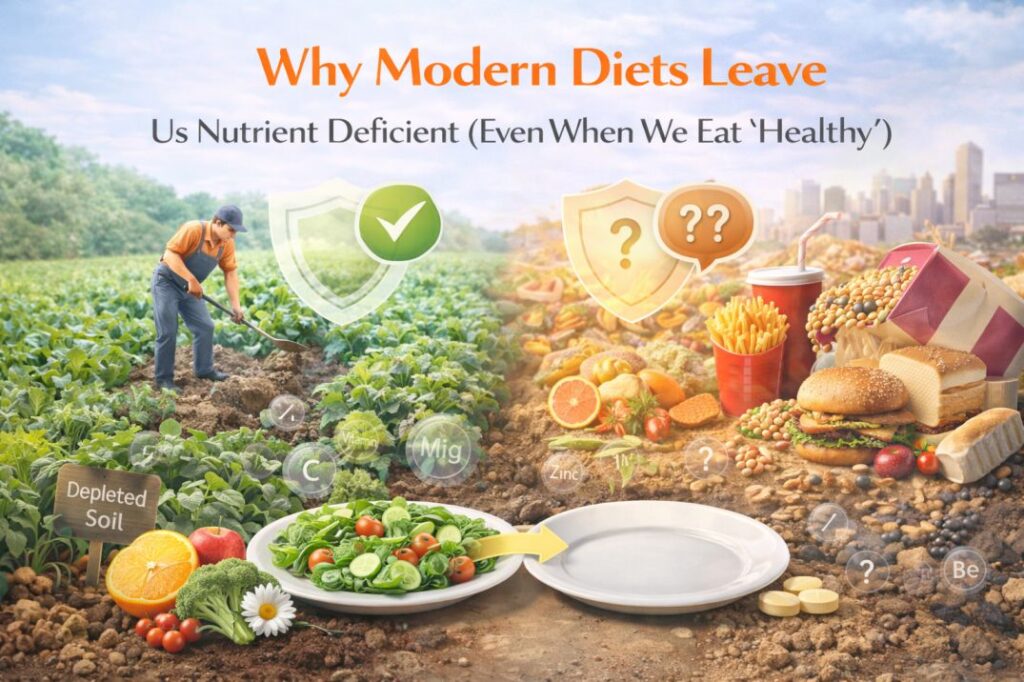
1. Food Is Not as Nutrient-Dense as It Used to Be
Decades ago, food was grown in mineral-rich soil, harvested at peak ripeness, and consumed locally. Today, most food is:
- Grown in depleted soils
- Harvested early to survive transport
- Stored for long periods
- Treated to improve shelf life, not nutrition
Studies have shown significant declines in key nutrients such as magnesium, zinc, iron, and vitamin C in modern fruits and vegetables.
This means you may need to eat far more food than before just to get the same nutrients your grandparents did.
2. Highly Processed Foods Dominate Modern Diets
Even diets that appear healthy often contain hidden processed ingredients.
Common examples include:
- Breakfast cereals marketed as “whole grain”
- Protein bars with added sugars
- Low-fat foods stripped of nutrients
- Convenience meals with preservatives
Processing removes fibre, vitamins, minerals, and phytonutrients — replacing them with calories that fill the stomach but starve the cells.
3. Nutrients Don’t Work Alone — Synergy Matters
Nutrition is not about individual vitamins. Nutrients work in complex networks, supporting absorption, metabolism, and cellular function.
“This is why nutrition experts often emphasise whole-food, synergistic nutrient combinations rather than isolated vitamins. Programmes like Pro Vitality, which combine vitamins, minerals, essential fats, antioxidants and cellular nutrients, are designed to support this natural nutrient synergy.”
For example:
- Vitamins require minerals to activate enzymes
- Antioxidants work best in combination
- Fats are required for absorption of fat-soluble nutrients
Many diets provide isolated nutrients but lack balanced nutrient synergy, leading to inefficiencies even when intake looks adequate on paper.
4. Stress Increases Nutrient Demand
Modern life places unprecedented stress on the body.
Chronic stress:
- Depletes B-vitamins
- Increases magnesium requirements
- Raises oxidative stress
- Impairs digestion and absorption
Stress doesn’t just affect your mind — it raises your nutritional needs, meaning the same diet that once worked may no longer be enough.
5. Digestion and Absorption Are Often Compromised
Eating healthy food doesn’t guarantee nutrients reach your cells.
Common factors that impair absorption include:
- Poor gut health
- Low stomach acid
- Inflammation
- Imbalanced gut bacteria
- Certain medications
If nutrients aren’t absorbed properly, the body behaves as if they were never eaten.
This is one reason people can eat well yet still experience fatigue, weak immunity, and slow recovery.
6. Calories Are Easy to Get — Nutrients Are Not
Modern diets are abundant in calories but often scarce in essential nutrients.
“Addressing hidden hunger requires more than calorie control. It means consistently supplying the body with a broad spectrum of essential nutrients — something many people struggle to achieve through food alone. This is where daily nutrition systems such as Pro Vitality can play a supportive role.”
This creates a paradox:
- You eat enough (or too much)
- But your cells remain undernourished
The result is:
- Low energy
- Cravings
- Weight gain
- Weakened immunity
- Poor long-term health
This is sometimes called “hidden hunger.”
7. Why Cellular Nutrition Matters
Health does not begin in the stomach — it begins in the cell.
“Cellular nutrition focuses on supplying nutrients in forms and combinations the body can use efficiently. Products such as Pro Vitality are designed around this principle, supporting the body at the cellular level rather than targeting single deficiencies.”
Your body is made up of trillions of cells, each requiring:
- Vitamins and minerals
- Essential fats
- Antioxidants
- Phytonutrients
When cells receive what they need, the body functions efficiently. When they don’t, symptoms appear — often long before disease is diagnosed.
This is why many nutrition experts emphasise cellular nutrition: feeding the body at its most fundamental level.
8. The Role of Whole-Food Nutrition
Whole-food nutrition focuses on providing nutrients in forms the body recognises and can use efficiently.
This approach prioritises:
- Natural nutrient complexes
- Balanced ratios
- Synergistic combinations
- Cellular-level support
Rather than chasing individual deficiencies, whole-food nutrition aims to restore overall nutritional balance.
Conclusion
Eating “healthy” is important — but in today’s world, it is often not enough on its own.
Modern farming practices, food processing, stress, and digestive challenges mean many people are unknowingly nutrient deficient despite their best efforts.
By understanding the limitations of modern diets and the importance of cellular nutrition, you can take a more informed, proactive approach to long-term health.
Nutrition isn’t about perfection — it’s about supporting your body consistently, intelligently, and at the cellular level.
“For those looking to bridge modern nutritional gaps, comprehensive daily nutrition systems like Pro Vitality can help support consistent cellular nutrition as part of a balanced lifestyle.”