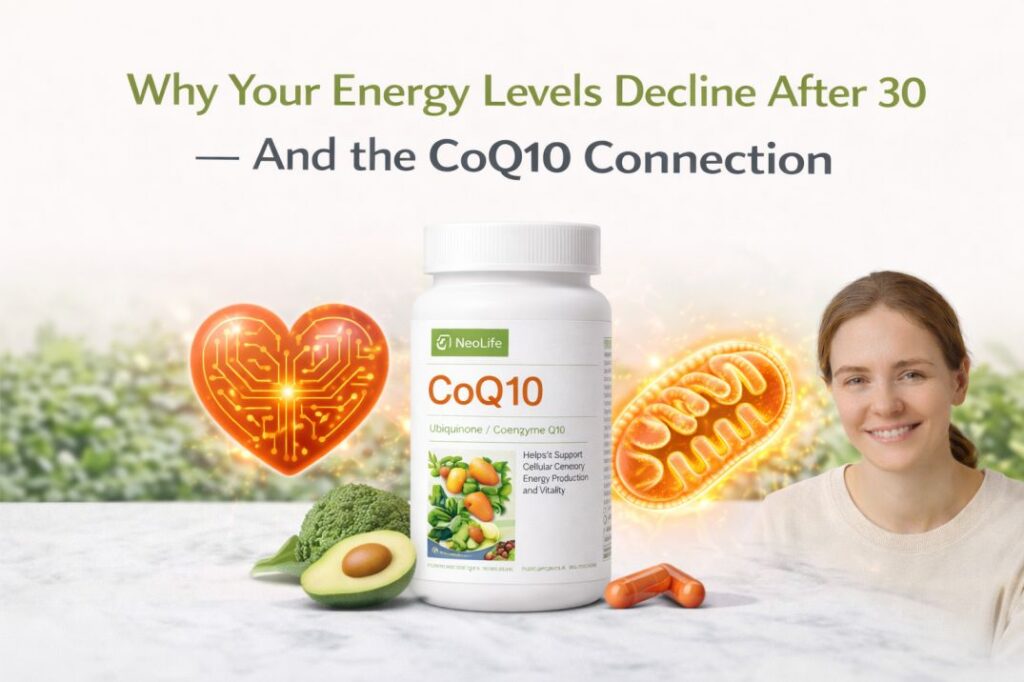
Why Your Energy Levels Decline After 30 — And the CoQ10 Connection
Introduction
If you’re in your 30s or 40s and wondering why you don’t have the same energy you once did, you’re not imagining it. Many people notice that staying focused, active, and energised becomes harder with age — even when diet and lifestyle haven’t changed significantly.
One of the most overlooked reasons for this gradual energy decline is a natural drop in a vital cellular nutrient: CoQ10.
Understanding the CoQ10 connection can help you support your energy levels naturally and sustainably.
What Happens to Your Body After 30?
As we age, several biological changes take place:
- Slower cellular energy production
- Reduced mitochondrial efficiency
- Increased oxidative stress
- Declining levels of certain essential nutrients
These changes don’t happen overnight, but they accumulate year after year. By your early 30s, your body already begins producing less CoQ10, a nutrient essential for energy production at the cellular level.
What Is CoQ10?
CoQ10 (Coenzyme Q10), also known as ubiquinone, is a powerful antioxidant found in every cell of the human body. It plays a crucial role in:
- Cellular energy production (ATP)
- Supporting healthy heart function
- Protecting cells from oxidative damage
- Supporting overall vitality
CoQ10 is especially concentrated in organs with high energy demands, such as the heart, brain, muscles, and liver.
Without adequate CoQ10, cells struggle to produce energy efficiently.
CoQ10 and Cellular Energy Production
Inside each cell are mitochondria — often referred to as the power plants of the body. These structures convert nutrients into ATP, the energy currency your body uses for:
- Physical activity
- Brain function
- Organ performance
- Muscle contraction
CoQ10 is essential for this process. It helps shuttle electrons within the mitochondria, enabling efficient ATP production.
When CoQ10 levels drop, energy production becomes less efficient — leading to fatigue, slower recovery, and reduced stamina.
Why CoQ10 Levels Decline With Age
Several factors contribute to declining CoQ10 levels after 30:
- Natural aging processes
- Increased oxidative stress
- Poor dietary intake
- Certain medications (including cholesterol-lowering drugs)
- Modern lifestyle stressors
Even people who eat well may not get enough CoQ10 from food alone, as dietary sources typically provide only small amounts.
Common Signs You May Be Low in CoQ10
Low CoQ10 levels may present as:
- Persistent fatigue
- Reduced exercise endurance
- Mental fog or poor focus
- Slower recovery after physical activity
- Reduced cardiovascular stamina
- General feeling of low vitality
These symptoms are often mistaken for “just getting older,” but nutrition plays a major role.
CoQ10 and Heart Health
The heart is one of the most energy-demanding organs in the body. It relies heavily on CoQ10 to function optimally.
CoQ10 supports:
- Healthy heart muscle function
- Efficient energy production in cardiac cells
- Antioxidant protection for cardiovascular tissue
This makes CoQ10 particularly relevant for individuals focused on long-term heart health and active aging.
The Antioxidant Role of CoQ10
In addition to energy production, CoQ10 acts as a powerful antioxidant. It helps neutralise free radicals that damage cells and accelerate aging.
By reducing oxidative stress, CoQ10 supports:
- Cellular longevity
- Healthy aging
- Overall vitality
Why Supplementation May Help After 30
Because natural CoQ10 production declines with age, supplementation can help restore optimal levels — especially for adults over 30 who want to maintain energy and cardiovascular support.
High-quality CoQ10 supplements provide a reliable source of this essential nutrient in a form your body can use effectively.
👉 View CoQ10 – 60 Capsules (NeoLife)
Why Quality Matters With CoQ10
Not all supplements are created equal. CoQ10 must be:
- Properly formulated for absorption
- Protected from oxidation
- Manufactured to high purity standards
NeoLife’s commitment to quality, science, and rigorous testing ensures that their CoQ10 supplement delivers consistent support you can trust.
How to Support Energy Naturally Beyond Supplements
For best results, CoQ10 works well alongside:
- Balanced whole-food nutrition
- Regular movement and exercise
- Adequate sleep
- Stress management
- Cellular-level nutrition support
Supporting your cells holistically leads to better long-term outcomes.
Conclusion
Feeling tired after 30 isn’t inevitable — but it does require a smarter approach to nutrition. Declining CoQ10 levels play a significant role in reduced energy, stamina, and vitality as we age.
By understanding the CoQ10 connection and supporting your body at the cellular level, you can take proactive steps toward sustained energy, heart health, and overall wellbeing.